


Behind every Cardano transaction is a carefully designed set of protocol parameters that determine how the Cardano blockchain operates. These parameters define the costs, limits, and rules that keep the network secure, efficient, and predictable. In this ongoing article series, we explore Cardano’s network parameters one by one, explaining how they work and why they matter for users, developers, and the broader ecosystem.
Our parameter today is the drep_activity governance parameter.
In Cardano’s recently launched on-chain governance framework, Decentralized Representatives (DReps) are the blockchain’s elected opinion-holders. Their job? Vote on governance proposals, signal community priorities, and steer Cardano’s decentralized agendas.
What Is the drep_activity Parameter?
Just like a morning roll call at school or the “ping” of a health monitor, the drep_activity parameter controls how a DRep proves they’re still engaged. As of this article the drep_activity parameter is set to 20. This means that a DRep must perform any one of a list of predefined actions every 20 epochs (100 days) to be considered active. Think of it like logging in to show you’re still participating – with the added weight of influencing a multi-billion-dollar ecosystem. The current actions are: Voting on a governance action
Updating your DRep certificate on the blockchain. The DRep certificate is an on-chain registration that holds information like DRep name, motivations, qualifications, and references.
Why This Matters: Liveness and Legitimacy
In distributed systems, “liveness” isn’t just philosophical—it’s practical. For governance to work, voters must actually vote. Without evidence of engagement, a DRep’s voting power becomes a stale relic, potentially misrepresenting the will of the delegators who entrusted them.
drep_activity is Cardano’s way of baking liveness into the protocol. If a DRep stops checking in, delegators can see that signal and are encouraged to choose a new DRep who has the time and capacity to represent their interests. This protects the system from stagnation and keeps the decision-making body fresh and accountable.
Decentralization Demands Discipline
The bigger picture? Cardano’s Voltaire era is trying to build decentralized governance structures that mirror—and improve upon—traditional civic models. Just like elected officials in your town hall, DReps need to show up to work. drep_activity makes sure they do.
It may not be the flashiest governance action on the menu, but it’s one of the most foundational. After all, what good is decentralization if the people we elect to represent us aren’t showing up?
There are conversations about even harsher outcomes for inactive DReps. Perhaps their certificates are automatically revoked? Or perhaps all their delegators are actually canceled - forcing their delegators to choose a new DRep? This second potentiality is not popular since delegators must select a DRep in order to withdraw staking rewards. If this second option is implemented, both the DReps and all of their delegators would be punished. It is important to note that in this scenario, delegators will still earn rewards but their rewards will be locked until they select a new DRep.
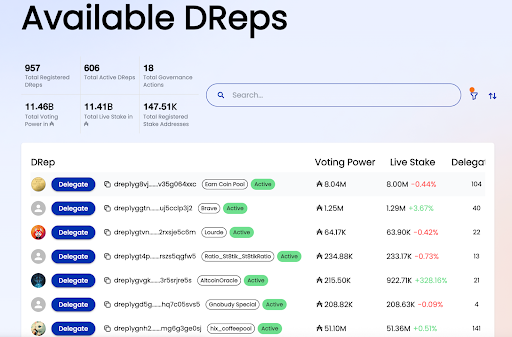
How can you know if your DRep is active? Most governance tooling including 1694.io (a tool we built and maintain) easily shows if a DRep is active or inactive:
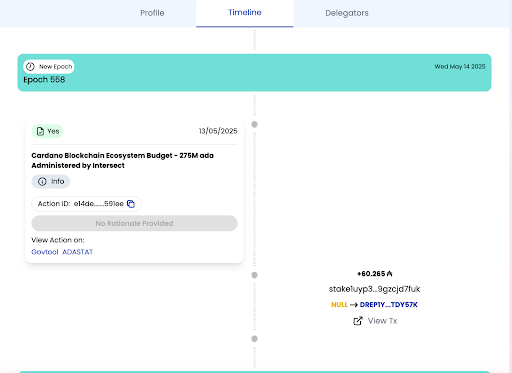
On 1694.io you are also able to open the DRep profile and see exactly what they have been up to on the timeline tab:


Aucun commentaire pour le moment...