

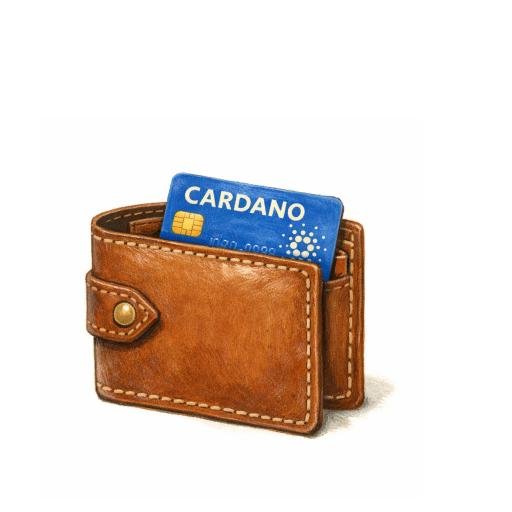
As I walked the expo floor at the Cardano Summit 2025 in Berlin, I bumped into one really exciting announcement – twice. Two separate booths were drawing steady traffic, and not just because of their above-average swag. Both EMURGO and Gero Wallet were announcing something Cardano users have wanted for years: a way to spend ada in the real world, using a familiar piece of plastic that works anywhere cards are accepted.
Without sounding like a hypester, I was frankly electrified by the general news of the Cardano payment cards. The Cardano community has long been excited and proud whenever there is any brick and mortar business that accepts ada. A Cardano hotel here, a coffee shop there… these are fun experiments, but still leave a big gap to global adoption.
At the Summit, I spent part of one afternoon scurrying between the two booths with a notebook full of questions. I watched the demos, compared their answers, and listened to how each team framed what they were building, and who they were building it for.
Both companies were touting the same headline - but it was not the same news.
It’s true that both are offering a way to spend your ada at the supermarket using a card. But the philosophy behind each project is markedly different. What follows isn’t a winner-take-all comparison. It’s a snapshot of a network finally reaching a long-anticipated milestone from two different directions.
The EMURGO Cardano Card: Scale First, Custody Later
For newcomers, it’s worth a quick reminder of who EMURGO is, and why this announcement landed with a bit of extra weight. EMURGO is one of Cardano’s original founding entities, tasked primarily with driving commercial adoption and enterprise partnerships. Unlike the other founders (research-heavy IOG and community-facing Cardano Foundation) EMURGO’s work has often happened quietly, behind the scenes. They are known for building the Yoroi wallet in the early days, but the Cardano community has occasionally wondered aloud what, exactly, EMURGO has been up to since then.
The Cardano Card is one answer to that question!
At the EMURGO booth, the emphasis was unmistakably reach. Their Cardano Card is launching through a partnership with Wirex, a huge fintech app with roughly six million users across more than 130 countries. If you are not familiar with it, Wirex is essentially just a payment platform that is focused on offering users a flexible, one stop shop for managing daily cashflow - in both regular fiat and crypto currencies. The new Cardano card lives directly inside the Wirex app. So it is immediately visible to existing users alongside other options.
That decision tells you almost everything you need to know about EMURGO’s priorities here. Rather than starting with a Cardano-native wallet audience, EMURGO opted for immediate mass exposure. They have placed ada in front of millions of users who may not have gone looking for it otherwise. In that sense, this isn’t just a payments product; it’s a marketing strategy.
At launch, the Cardano Card is custodial and multi-chain. Ada sits alongside BTC, ETH, stablecoins, and others, and spending works exactly as users expect from a modern crypto card: swipe, tap, or pay online, with the conversion handled behind the scenes. Wirex’s existing infrastructure also unlocks additional features like yield accounts, borrowing, and travel-friendly perks.
There is a roadmap beyond this initial phase. EMURGO representatives were clear that a self-custodial option—likely tied to Yoroi—is planned for 2026. But that is explicitly phase two. The first goal is adoption at scale, even if that means leaning on the old-school custodial model to get there.
In plain terms: this is the card you could hand to your mom and confidently say, “Just use it like a normal debit card.”
The Gero Card: Cardano-Native, Keys Intact
A short walk away, the Gero booth felt like it was answering a completely different question. The Gero Card is deeply Cardano-native and explicitly self-custodial. It lives inside the Gero Dashboard, not a third-party super-app, and it’s designed for users who already care deeply about where their keys live and how their ada moves.
The architecture here is more philosophically aligned with Cardano’s roots. Ada stays under user control and in its usual spot in your Gero Wallet, until the moment it’s “topped up” to the card. At that point it’s converted to euros through regulated European partners. Gero remains non-custodial throughout the process, while meeting KYC and compliance requirements.
This approach won’t win on instant recognizability. You have to know Gero exists. You have to install their dashboard. Today, the experience is primarily desktop-focused, with mobile support on the roadmap. But for Cardano insiders - especially self-custody purists - it offers something genuinely new. There are also some cool perks layered in, including ada cashback through integrated shopping partnerships. Spend in fiat, earn ada back into your wallet.
This is not the card you hand to your mom, unless you’ve already done all the onboarding for her.
An important note: Financial tools don’t run on imaginary outer-space rails. Once you start spending currency at a brick-and-mortar grocery store, it all needs to fall in line with real-world local government regulations & compliance requirements. So these new tools aren’t available everywhere immediately. From what I gathered, I think both cards are available to users in the EU for sure. They are not yet available to me in the USA. Both Emurgo and Gero claim that they hope to crack into the US market in 2026. I didn’t look into availability in all other world jurisdictions - and the news will be constantly changing as various countries figure out how they are going to adopt crypto financial tools on their own timelines. All that to say: depending on where you live, these cards may be available now, or perhaps coming soon!
Two Cards, Two Definitions of “Adoption”
What struck me, standing between these two booths, was how complementary the announcements really are.
EMURGO’s card answers the question: How do we put ada in front of the largest possible audience, right now?
Gero’s card answers a different one: How do we let committed Cardano users spend ada without compromising on self-custody?
- Reach vs. purity
- Familiar fintech UX vs. Cardano-native control
- Immediate mobile readiness vs. deeper wallet integration
Ready to try it?
The EMURGO Cardano Card is accessed through the Wirex app. After creating or logging into a Wirex account, eligible users will see the Cardano Card option within the app’s card section. Availability depends on country and local regulations. They will send you a real physical card you can stick in your leather wallet, and swipe at the store! Or, of course, you can use it as a digital payment method on your phone. I installed the Wirex app and set up a basic account, but I didn’t get to see the card yet, as it’s not yet available to users in the U.S.A. The Gero Card is available directly inside the Gero Wallet Dashboard, which is currently a desktop-only interface. You can sign up for a virtual or physical card from within the wallet interface, with ada remaining self-custodial until it is topped up to the card and converted to fiat via regulated partners. So again, availability is going to depend on your local regulations. If you’ve gotten one of the new Cardano cards, we’d love to hear your experience in the comments!

No comments yet…