

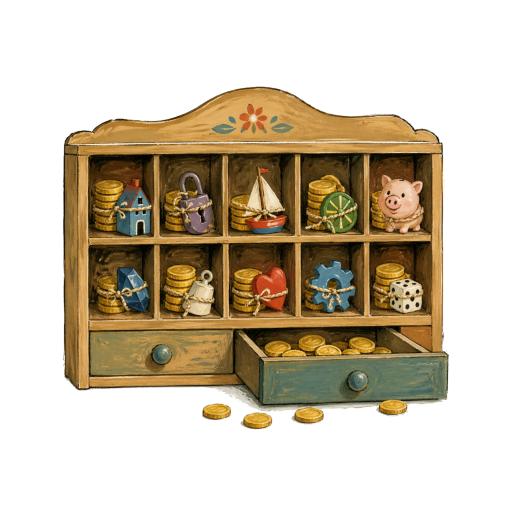
Every blockchain that stores an on-chain state has to solve the same underlying problem: how do you stop people from filling node memory for free? In our series exploring Cardano’s network parameters, we discussed this issue, and learned about one part of Cardano’s solution: the coins_per_utxo_word parameter. This protocol plays a role in every transaction, and shows its face in every wallet, yet it is not commonly understood.
Here is the tl;dr: At times, you might notice certain quantities of ada in your wallet that seemingly cannot be freely spent. They are there, but are tied up somehow. The reason for it traces back to these three Cardano network parameters and how they do their job to prevent different system abuses:
- key_deposit - Prevents abuse of staking transactions. Locks up 2 ada. Read more at key_deposit
- coins_per_utxo_word - Prevents abuse of everyday transactions. Locks up to 1.57 ada per UTXO per Cardano token. Read more deeply at coins_per_utxo_word
- collateral_percent - Prevents abuse of smart contract transactions. Locks up to 5 ada. Read more at collateral_percent
For today we are on to another topic: How do you free up that locked ada?
Obviously preventing spam is a worthy goal, but locking up your ada forever wouldn’t be a well-designed outcome either! Thankfully, there are lots of easy ways to shake that stuck change out of the back corners of your ada piggy bank – you just have to recognize the situation and know what to do.
Freeing up your ada and making them spendable
When the locked ada is just 2 or 3 ada it may not be a big deal. But what happens when locked ada accumulates to 10, or 30? There are a few tricks of the trade to unlock ada in your wallet and make them spendable on Cardano.
Burn the tokens If the locked ada are attached to Cardano tokens, most NFT projects and token protocols provide a burn mechanism. Burning sends the token to an unspendable address or destroys it through a smart contract, and the minimum ada accompanying it returns to your wallet as a free UTxO. Burning is also built directly into the Cardano Native Asset account system. The same way you can instruct Cardano to issue your token, with the keys that issued the token projects can also instruct Cardano to burn them. Burning is a good option if the project(s) no longer exists. It’s also an option if the token was sent to your wallet without your permission, either as part of a Phishing attempt or mass token distribution via an Airdrop. The Snek meme token for example is famous.
Send the tokens to an exchange You probably have an account with Coinbase or some other centralized exchange so that you can off-ramp your ada. Sometimes users have been known to send UTxO with tokens in them to exchanges as an alternative way of burning. The exchanges, not knowing how to process the extra token information, will usually just drop them. This then allows you to trade the freed up ada. This method is not really recommended though; there have been some cases of exchanges getting confused and just ignoring the entire transaction without crediting the ada.
Sell the tokens Some token sales on secondary markets will net you more than the locked ada value, making this the most practical option for assets that still have market value. The marketplace will usually have the user provide the Ada needed to lock the token in their wallet. A successful sale would mean you get your locked ada returned plus however many ada you’re able to fetch for the sale.
Send the tokens Transferring the tokens to another wallet sends the locked Ada along with them. You lose some ada to that wallet that receives the tokens, but you regain full control of your remaining ada. Sometimes, more than what is needed may be locked up depending on how many transactions you’ve done and what those transactions are doing. This is a good option if you have a second wallet for storing tokens you’re not quite ready to let go of but you don’t want to lock up any more Ada than you absolutely need to.
Consolidate UTxOs
If you hold many small token UTxOs—each with its own minimum deposit—some wallets allow you to push a button to consolidate tokens into fewer UTxOs. Fewer UTxOs means fewer deposits, freeing up more ada for general use. If your wallet does not explicitly have a button to this, the manual and more direct way is to simply send the full wallet balance to yourself. This transaction will automatically trigger the UTxO consolidation. This is a good option if you’re just interested in freeing up Ada - not trying to get rid of tokens and not trying to park tokens in a special wallet.
Conclusion
Locked ada is annoying, especially when it starts to add up in small, scattered amounts across your wallet. But it’s worth remembering that it’s part of the design for how the network prevents spam, abuse, and bigger problems down the line. The other good news is that the ada isn’t inaccessible forever. It can generally be recovered with a little wallet cleanup, whether that means consolidating UTxOs, sending or selling tokens, or getting rid of assets you no longer want. Next week, we will widen the lens. Cardano is not the only blockchain trying to solve this problem. Bitcoin and Solana each have their own ways of preventing users from taking up on-chain space for free, so come back to learn more with a little comparative analysis!

No comments yet…